
National Bamboo Roundtable: Unlocking India’s Bamboo Economy
02.03.26
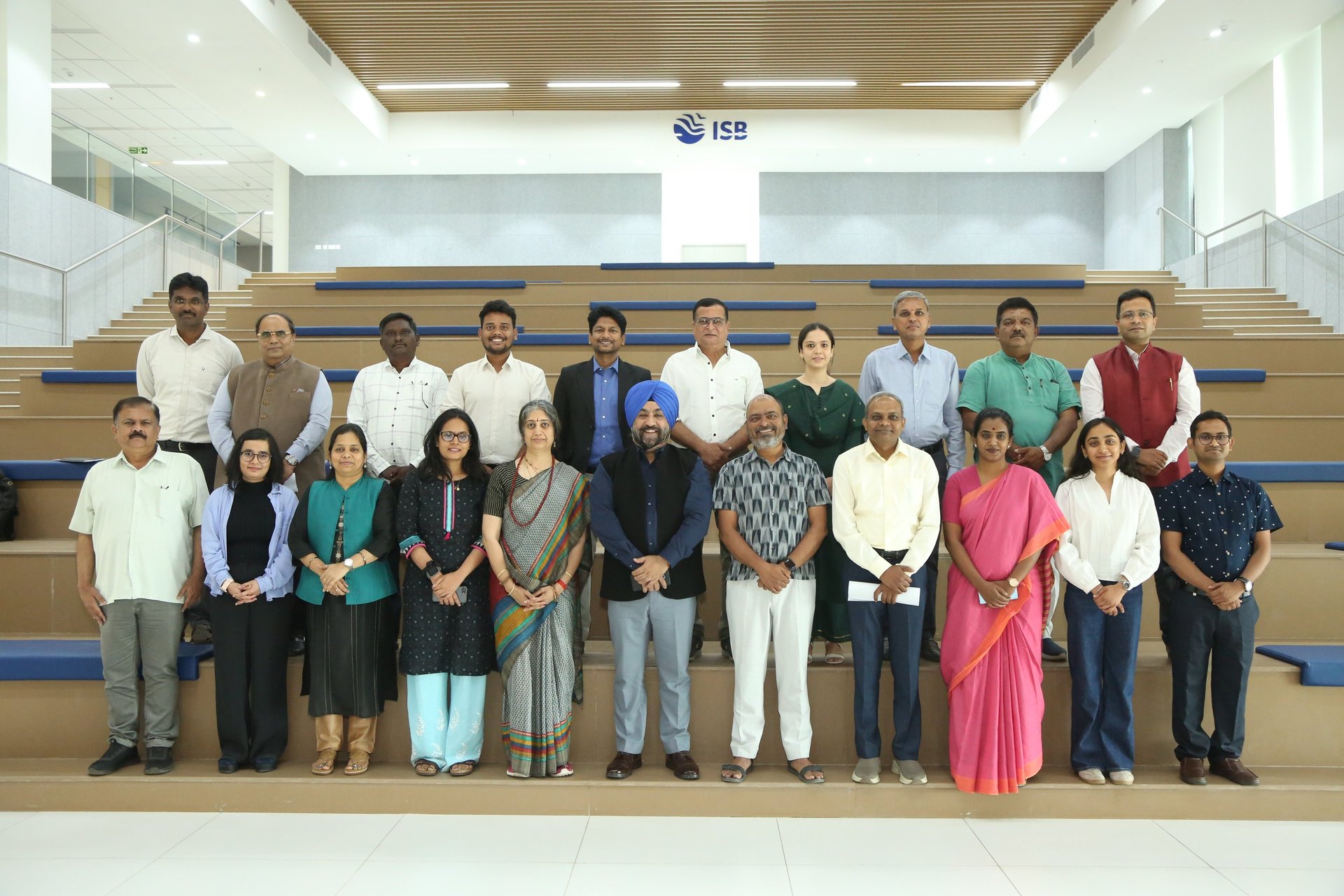
The National Bamboo Roundtable, held on 26–27 February 2026 at the Indian School of Business (ISB), Hyderabad, was convened to address a critical paradox at the heart of India’s bamboo sector: despite possessing nearly 30% of the world’s bamboo resources, the country captures less than 4% of the global bamboo market. The roundtable brought together a diverse group of stakeholders across the bamboo value chain—including Community Forest Rights (CFR) collectives, smallholder farmers, industrial buyers, entrepreneurs, policymakers, researchers, and philanthropic organisations—to collectively examine why this gap persists and what it would take to unlock bamboo as a scalable economic and sustainable resource.
Over two days of structured discussions, participants mapped the current landscape of supply capabilities, industrial demand, and the enabling ecosystem. What emerged was a clear picture of fragmentation: supply systems that cannot deliver consistent quality or scale, industrial demand that lacks clarity on species and specifications, and enabling institutions that operate without integrated coordination. This disconnect has resulted in high transaction costs, weak market linkages, and missed opportunities across sectors where bamboo could serve as a viable alternative—ranging from construction and textiles to bioenergy, steel, and emerging green technologies.
Participants highlighted several systemic barriers. On the demand side, industrial buyers struggle with the absence of species-to-application mapping, making it difficult to specify requirements or invest with confidence. On the supply side, challenges include poor cultivation practices, lack of aggregation infrastructure, depletion of natural bamboo resources without regeneration, and limited mechanisation. Governance issues further complicate the ecosystem, with unclear implementation of forest rights, regulatory bottlenecks such as transit permits, and inconsistent interpretations across states creating uncertainty for both producers and buyers.
At the same time, the roundtable underscored the scale of untapped opportunity. Bamboo was recognised as a high-potential feedstock across multiple industries, including biochar for steel production, pellets for thermal power, ethanol, textiles, and advanced materials such as carbon products for EV batteries. Participants also noted the significant value addition potential—from low-value raw bamboo to high-value engineered products—provided that processing, technology, and market linkages are effectively integrated.
The discussions moved beyond diagnosis to identify immediate and long-term priorities. In the short term, there was strong consensus on the need to unblock raw bamboo movement by streamlining regulatory processes, particularly transit permits and clarifying commercial rights under community forest governance. Establishing forward market linkages for plantations reaching maturity, especially those under public programmes like MGNREGA, was identified as a time-sensitive opportunity. Participants also emphasised the importance of initiating a “bamboo economic atlas”—a planning tool that maps species, geographies, demand centres, and infrastructure—to enable informed decision-making and investment.
To sustain momentum beyond the convening, three thematic working groups were proposed, focusing on community-based governance and management, bamboo cultivation with smallholder farmers, and the development of industrial-scale bamboo clusters. These groups are intended to translate discussion into action, with clearly defined timelines spanning short-, medium-, and long-term goals.
A key outcome of the roundtable was the articulation of a broader vision: the creation of a ‘Network of Excellence’ as a neutral, collaborative platform that connects stakeholders across the ecosystem. Rather than implementing projects directly, this network would enable coordination through knowledge sharing, development of standards, species-to-application mapping, and relationship-building—addressing the structural gaps that currently prevent the sector from scaling.
The roundtable concluded with a shared recognition that India does not lack bamboo resources, technological capability, or entrepreneurial energy. What has been missing is coordination—an institutional mechanism to align supply, demand, and enabling systems. By bringing these actors together and outlining a pathway for continued collaboration, the National Bamboo Roundtable represents an important step towards building a more integrated, efficient, and scalable bamboo economy in India.