
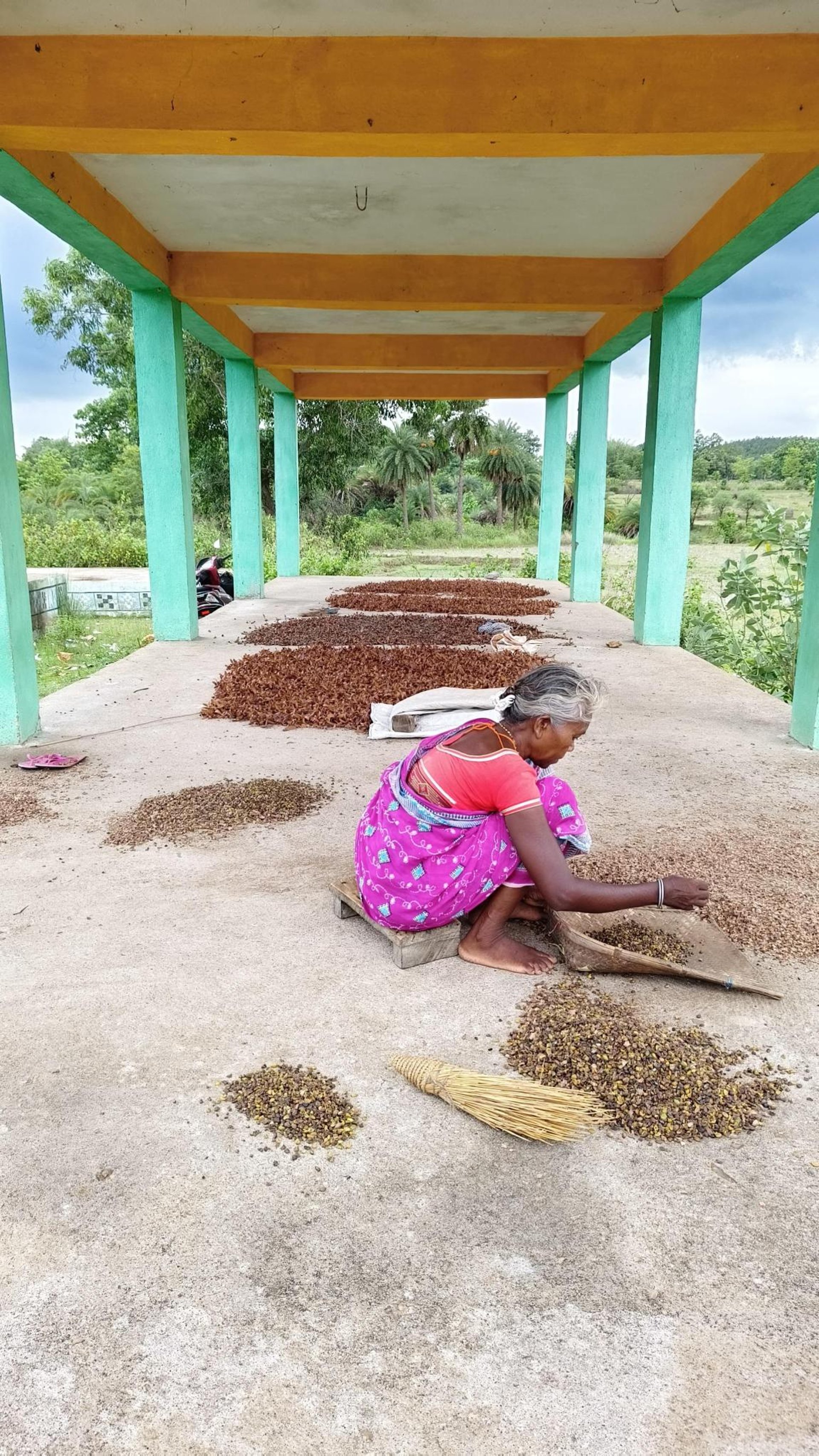
Transforming Odisha's Forest Economy
02.02.26
Odisha’s forests sustain millions of livelihoods, yet the tribal women at the centre of this economy face limited market access, weak bargaining power, and low financial returns. This report highlights how we worked with the Government of Odisha to implement a series of institutional innovations aimed at strengthening local governance and forest-based livelihoods. From supporting the large-scale recognition of Community Forest Rights under the Mo Jungle Mo Jami campaign to establishing women-owned, forest-based Producer Companies and enabling technology-driven governance, the report traces a model built on community ownership and economic inclusion.
It presents the Sulabhaa model—a scalable approach that advances women’s economic participation while connecting market access, community ownership of forests, and forest conservation across Odisha’s tribal regions.