
22.05.26
Understanding Bamboo Value Chains in Community Forest Rights Lands of Andhra Pradesh


On 6 January 2026, the Initiative on the Forest Economy (IoFE) facilitated a multi-stakeholder field visit to Community Forest Rights (CFR) areas in Rampachodavaram and Chintur divisions, Polavaram district, Andhra Pradesh. The visit aimed to assess bamboo resources, explore industrial linkages, and strengthen partnerships between forest-dependent communities, government institutions, and industries.
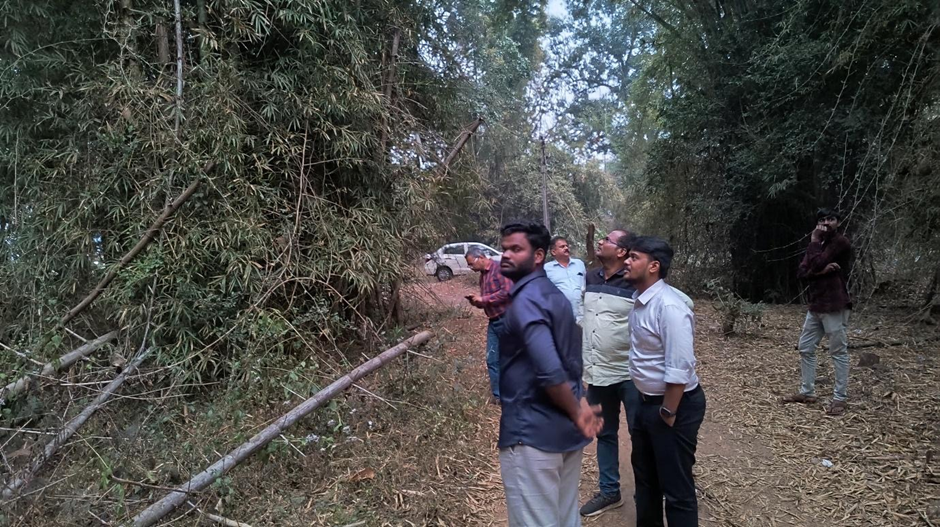
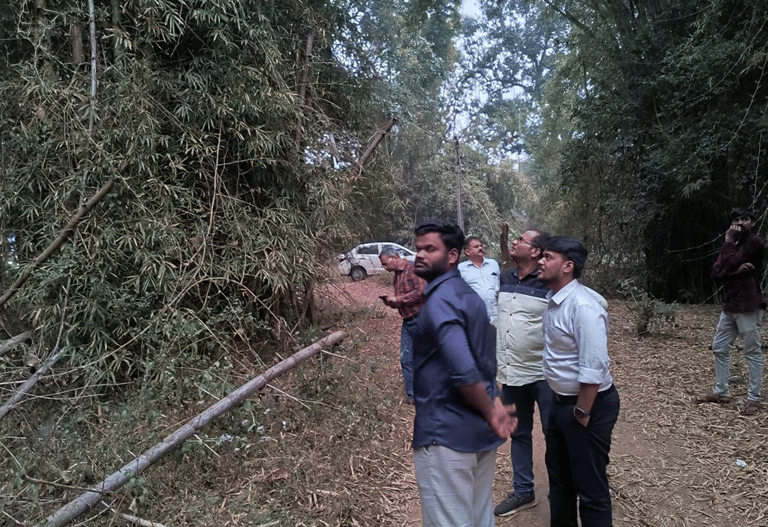
Field inspection of bamboo clumps in Chintur division of Polavaram district.
The field visit was attended by community members from CFR villages, officials from the Forest, Horticulture, and Agriculture Departments, and representatives from Integrated Tribal Development Agency (ITDA), Society for Elimination of Rural Poverty (SERP) – Velugu, and the District Water Management Agency, ITC Mangaldeep, UltraTech Cement, JANS Bamboo, and Nandan Enterprises.
Polavaram is a newly formed district in the state of Andhra Pradesh, carved out of the Rampachodavaram and Chintur revenue divisions. Both Polavaram and the Alluri Sitharama Raju (ASR) district are rich in natural bamboo forests, particularly within CFR areas recognised under the Forest Rights Act (FRA), 2006. Common bamboo species found in these landscapes include Bambusa bambos (thorny bamboo) and Dendrocalamus strictus. To strengthen forest-based livelihoods and improve market access, five forest-based producer companies (PCs) have been established in Polavaram to aggregate bamboo and other seasonal forest products and facilitate direct market linkages within CFR landscapes.
Significance of Geography
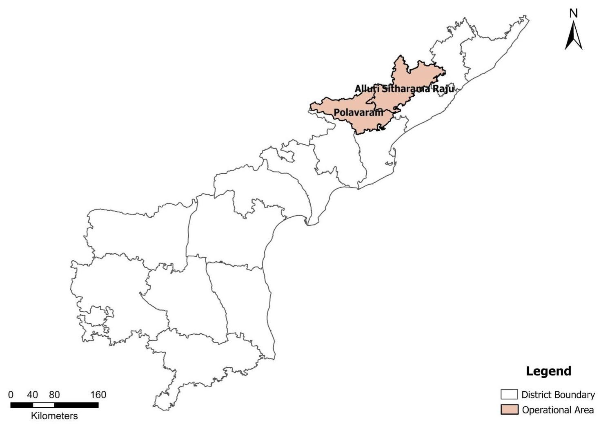
The map highlights Polavaram and Alluri Sitharama Raju districts in Andhra Pradesh state, indicating their proposed positioning as key hubs for quality bamboo production and supply.
The field visit commenced with an introductory meeting at the ITDA Conference Hall, Rampachodavaram at 10:00 am.
It was chaired by Shri A S Dinesh Kumar, IAS (I/c Collector) and Shri B Smaran Raj, IAS (Project Officer, ITDA Rampachodavaram), Corporate representatives from JANS Bamboo Products, ITC Mangaldeep, and UltraTech Cement, along with the IoFE team, attended the session.
Key discussions revolved around the vast potential of bamboo, its industrial applications (construction, agarbatti sticks, and biofuel), and challenges in harvesting, processing, and the supply chain. Mr Sanjeev Karpe and Mr Muralidhar shared rich industry experiences, success stories from other states, and the need for sustainable harvesting.
Following the meeting, the corporate teams split into two groups and proceeded to field visits:
One team with UltraTech Cement representatives, visited Maddirathigudem CFR (Rampachodavaram division)- henceforth referred to as Village 1.
The other team with ITC Mangaldeep and JANS Bamboo representatives, visited Sirasanapalle and Devarapalle CFRs (Chintur division)- henceforth referred to as Village 2.
Village 1 Visit
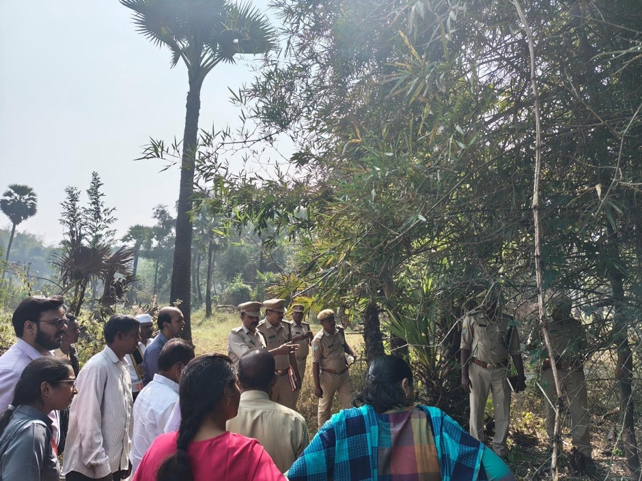
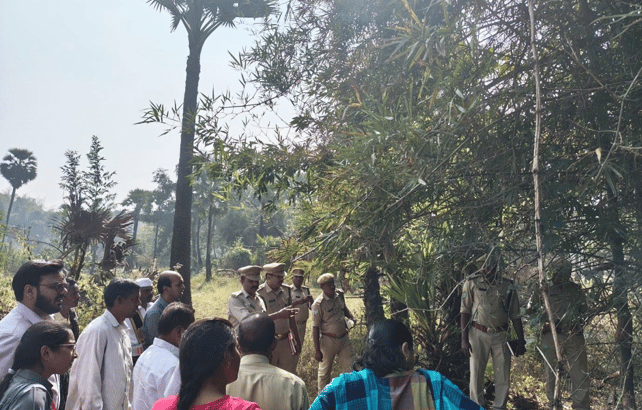
Representatives from Ultra tech cement assessed harvest-ready bamboo clumps in the village, where Forest Department stock mapping identified nearly 3,500 culms. Discussions were focused on procurement pricing, moisture content, and labour considerations for thorny varieties. The visit also addressed community concerns about the Eco-Sensitive Zone (ESZ) and ensured clarity that CFR rights empower local livelihoods.
Details of the Field Visit
UltraTech Cement team explaining bamboo’s potential as a biofuel to community members, Forest Department officials, IoFE team, and ITDA Project Officer in Village 1.
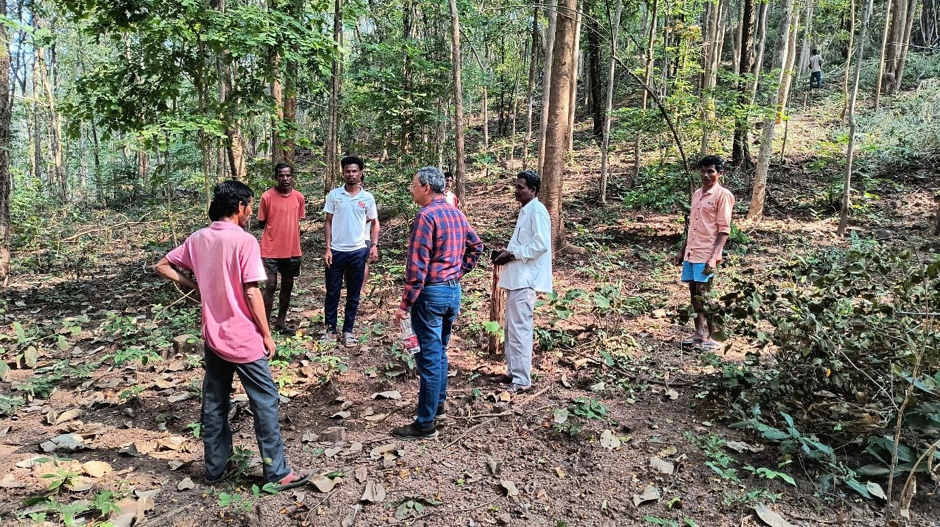
The visit began with an inspection of bamboo clumps in Village 2, followed by discussions with community members on sustainable harvesting practices, including leaving the roots intact. Communities shared that an estimated 2 lakh bamboo poles were ready for harvest, with 40–50 people available for collection activities.
Village 2 Visit
Field inspection of bamboo (Dendrocalamus strictus) by ITC Mangaldeep, JANS Bamboo, and IoFE team along with community members to assess availability and suitability for diverse industrial applications.
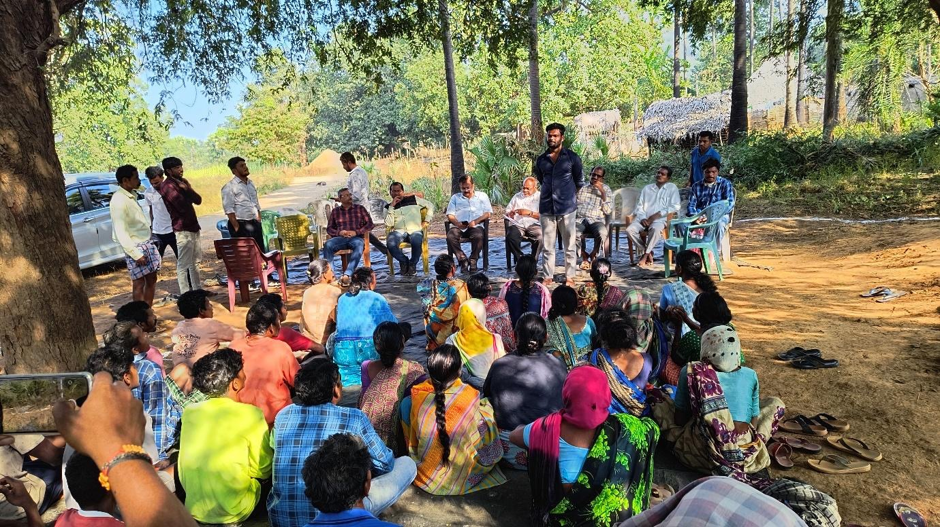
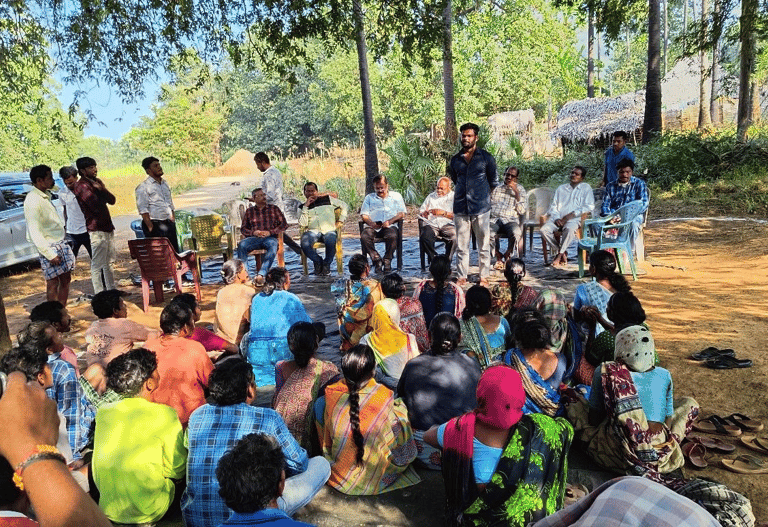
ITC and JANS representatives, along with the IoFE team, engaging with community members in Village 2 on bamboo harvesting practices, livelihood potential, and their readiness to begin harvesting this season.
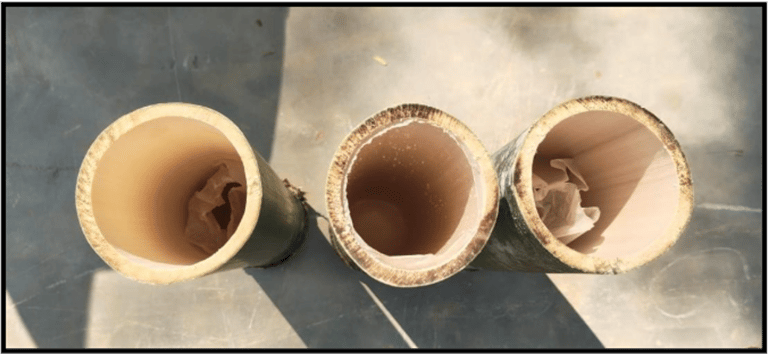
Cross-section of thorny bamboo (Bambusa bambos), showing culm structure and hollowness. ITC Mangaldeep found Bambusa bambos here highly suitable due to higher hollowness, larger diameter, and better characteristics for stick manufacturing.
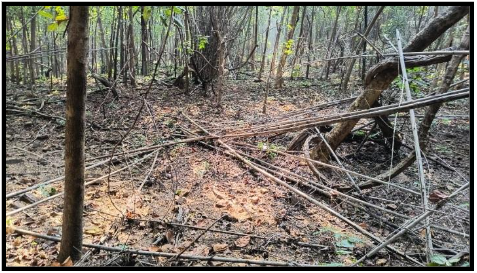
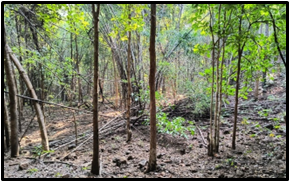
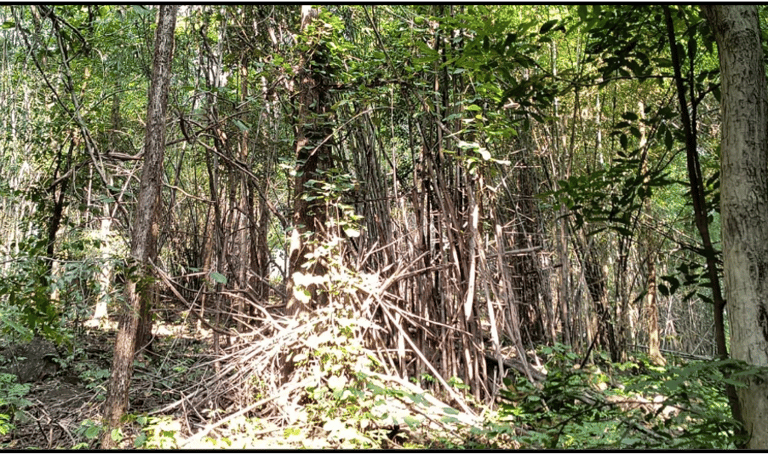
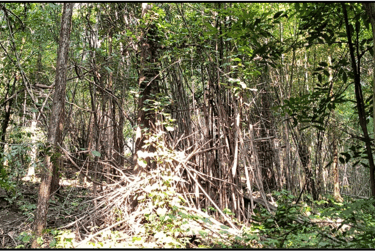
Damaged Bamboo Clumps in Village 2 CFR : Discussions with the community revealed that bamboo harvesting has not occurred in the village since 2016, resulting in loss of stock due to flowering.
District-Level Review Meeting
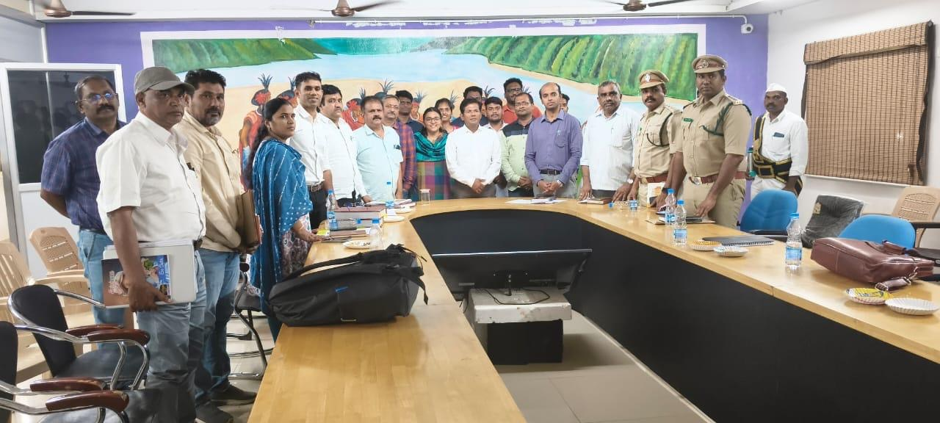
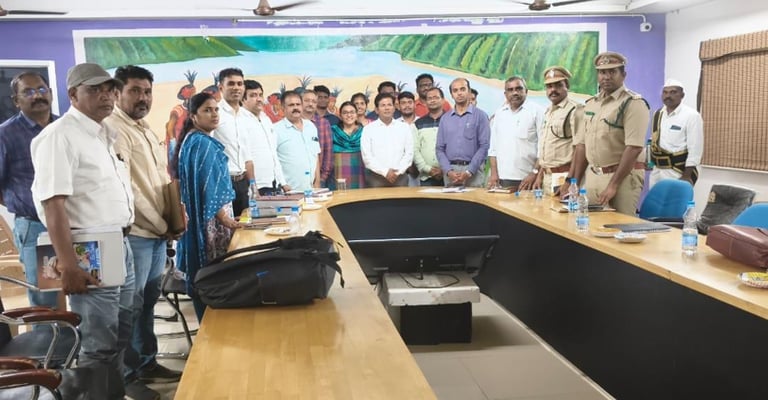
Day-long engagement culminating in an intensive review meeting chaired by District Collector, Shri A S Dinesh Kumar, and Project Officer, ITDA Rampachodavaram, Shri Bachu Smaran Raj, with officials from Forest, Horticulture, and Agriculture Departments, SERP–Velugu, and District Water Management Agency, along with IoFE team and industry partners.
After the village visits, the teams regrouped in the evening for a comprehensive review and orientation meeting at the ITDA Conference Hall, chaired by the district collector.
All stakeholders are aligned on sustainable practices, community benefit-sharing, and long-term value chains. The DC outlined a vision to position Polavaram and Alluri Sitharama Raju districts as hubs for quality bamboo supply and production. He proposed inter-departmental visits, peer-learning exchanges with women shareholders from successful producer companies in other states, and infrastructure support (roads, collection centres). Key actions include sending samples for testing, joint inventory improvements, and fast-tracking permissions for demonstration harvesting in Village 1.
This engagement reinforces that forests are not only ecological assets but also economic landscapes. With secure CFR tenure, institutional support, and market linkages, bamboo can drive sustainable, climate-resilient, and inclusive rural livelihoods.