13.02.26
Gondia District Administration and BIPP-ISB Partner to Strengthen Tribal Livelihoods in Maharashtra
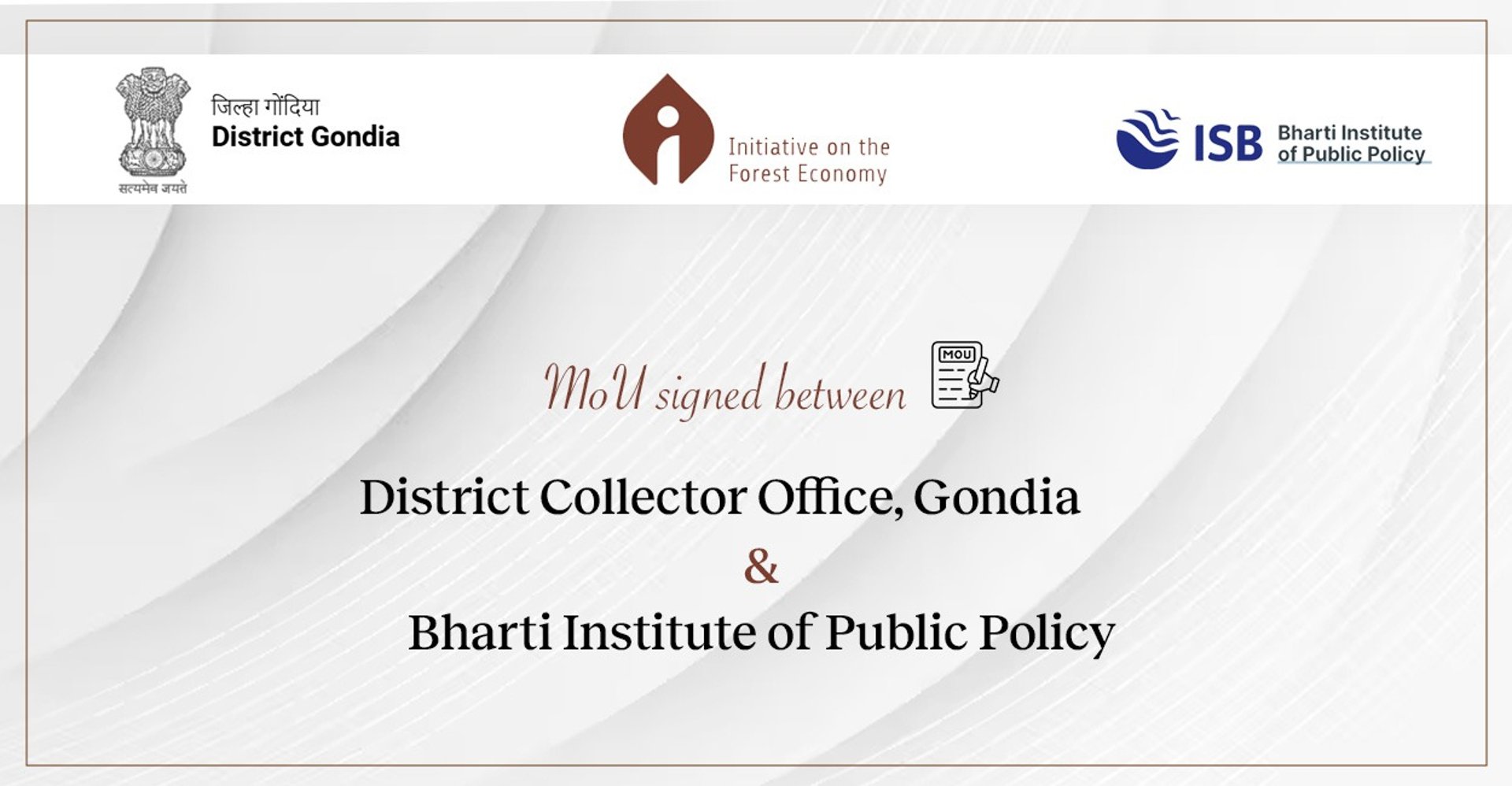
In a significant step towards promoting sustainable development and strengthening rural livelihoods, the District Collector Office, Gondia, has entered into a partnership with the Indian School of Business (ISB), through its Bharti Institute of Public Policy (BIPP). Formalised through a Memorandum of Understanding (MoU) signed on 10 February 2026, this collaboration aims to enhance the forest-based economy and empower tribal communities, particularly women-led enterprises, across the district.
A Shared Vision for Inclusive Growth
Gondia, a predominantly tribal district in Maharashtra, relies heavily on forest resources for livelihoods. Recognising this, the partnership focuses on improving the value, governance, and market access of Seasonal Forest Products (SFPs), such as bamboo, harra, beheda, and amla.
The collaboration brings together the administrative strength of the District Collector Office and the policy expertise of ISB-BIPP. Together, they aim to create a robust ecosystem that supports community-led forest management, transparent trade practices, and sustainable income generation.
Key Areas of Intervention
The MoU outlines a comprehensive and multi-dimensional approach to strengthening the forest economy:
1. Community Forest Governance
The initiative will support the development of Community Forest Resource Management Plans (CFRMPs), enabling local committees to manage forest resources sustainably, transparently, and equitably. Special emphasis is placed on ensuring meaningful participation of women and vulnerable groups.
2. Women-Centric Enterprise Development
A core pillar of the collaboration is the promotion of women-led Producer Companies and community enterprises. These entities will receive support in business planning, compliance, and operational systems, enabling them to scale sustainably.
3. Strengthening Supply Chains and Market Access
Efforts will be made to improve aggregation, processing, grading, and quality assurance of forest products. The partnership will also facilitate linkages with industrial and institutional buyers, ensuring better price discovery and timely payments to primary collectors.
4. Capacity Building and Training
Training programmes, workshops, and orientation sessions will equip stakeholders with essential skills in harvesting, processing, packaging, and enterprise management, ensuring readiness ahead of forest produce seasons.
5. Institutional and Value Chain Coordination
The collaboration will establish mechanisms to improve coordination among Producer Companies, forest committees, and government stakeholders, ensuring smooth operations across procurement, storage, and sales.
6. Technology and Mechanisation
Appropriate tools and mechanisation solutions will be introduced to enhance productivity, improve quality, and reduce manual labour, particularly benefiting women involved in forest-based activities.
7. Research and Knowledge Sharing
The partnership will document best practices, publish case studies, and generate evidence-based insights to inform policy and enable replication in other regions.
8. Sustainability and Impact Measurement
Frameworks will be developed to monitor performance, ensure ecological sustainability, and measure the long-term impact of interventions on livelihoods and forest ecosystems.
Roles and Responsibilities
The MoU establishes clear responsibilities for both parties. ISB-BIPP will provide technical expertise, research support, market linkages, and capacity-building initiatives. The District Collector Office will facilitate coordination with government departments, provide administrative support, and ensure the availability of necessary resources and infrastructure.
Looking Ahead
With a three-year duration, the partnership represents a long-term commitment to building resilient, community-driven forest economies. By combining governance, innovation, and grassroots participation, this initiative has the potential to transform livelihoods in Gondia, while setting a model for sustainable development across similar regions.