
02.01.26
Sona Buru Jungle Producer Company Completes Harra Sale in Simdega, Jharkhand
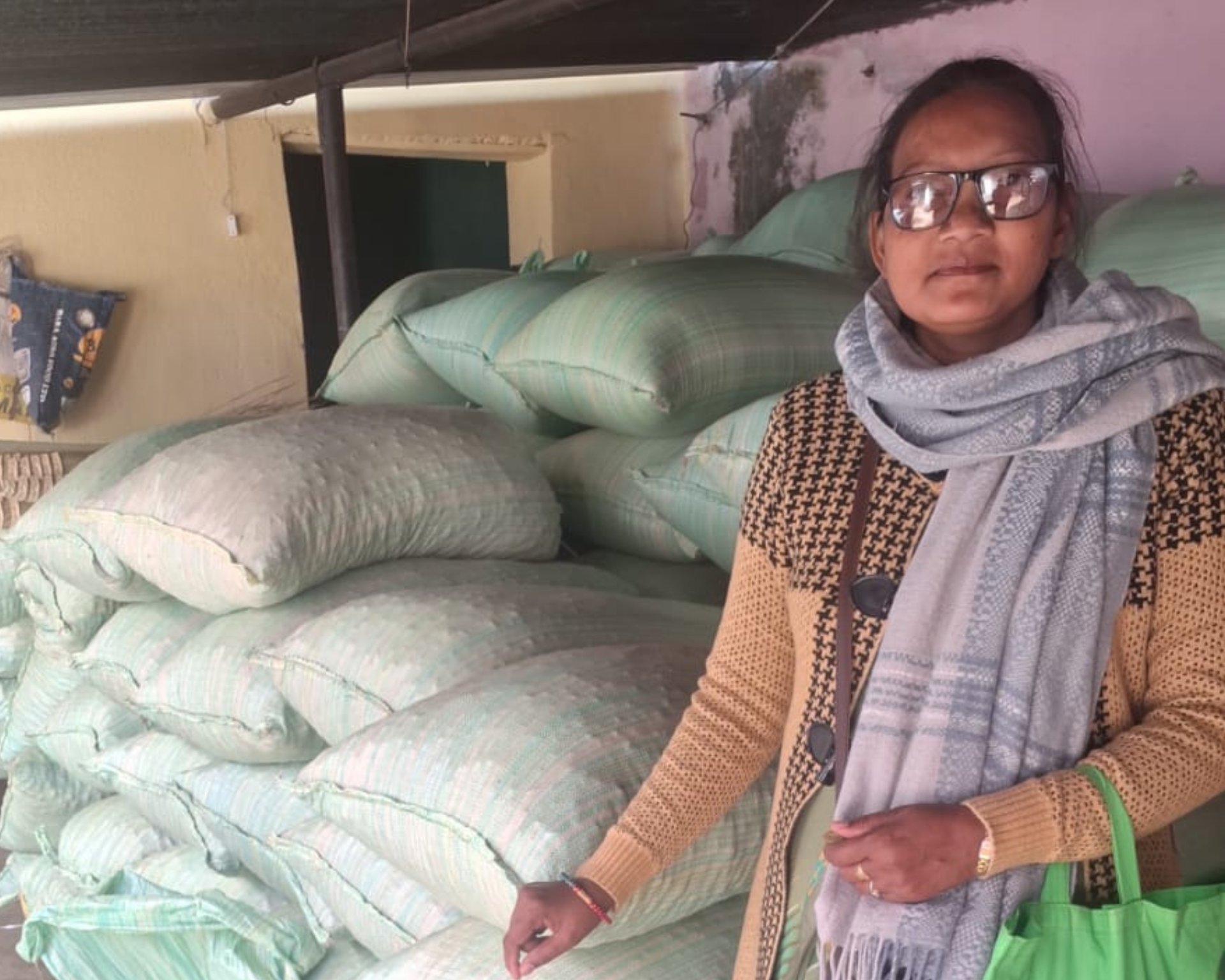
On 30 December 2025, the Sona Buru Jungle Producer Company (SBJPC) achieved a significant milestone by completing its first-ever sale of dried Harra (Terminalia chebula) in Simdega district, Jharkhand. The company sold 596 kg of Harra to Shree Balajee Traders. This sale marks a crucial step in SBJPC’s efforts to understand the Harra value chain, quality standards, and market dynamics.
Harra is an important seasonal forest product with growing demand across medicinal, pharmaceutical, leather, textile, and cosmetic industries. Its fruits are valued for their high tannin content and bioactive compounds, which are used in herbal formulations, vegetable leather tanning, and natural dyeing and finishing of textiles.
Navigating Initial Supply Chain Challenges
The path to this first procurement involved several learning hurdles. At the outset, SBJPC had limited information on buyer requirements across the supply and value chains. Early buyers initially expressed interest in fresh Harra, which was communicated to village collectors. However, after inspecting samples, buyers rejected them due to concerns about fruit size and seed quality. SBJPC therefore had to quickly shift strategy and mobilise communities to prepare dried Harra instead.
Market Volatility and the Power of Negotiation
The sale took place in a difficult and uncertain market. Prices varied significantly depending on size and quality, and SBJPC faced competition from local traders who were purchasing even low-grade Harra at ₹13–14 per kg. Although Balaji Trades had offered ₹13 per kg earlier, they reduced the offer to ₹12 per kg just before the transaction, citing a market downturn. SBJPC negotiated with them, and based on the quality of its dried Harra, secured a final price of ₹12.50 per kg.
Scientific Trials and Quality Control
To strengthen its future operations, SBJPC invested in understanding how processing affects quality and financial returns. Controlled experiments were conducted in the Jaldega, Kolebira, and Bano blocks of the district. In each location, 20 kg of fresh Harra was processed to observe moisture levels, weight loss during sun-drying, and the labour and time required for decortication. These trials generated practical insights that will help maintain consistent quality and support more accurate planning in future sales.
SBJPC is also exploring wider market opportunities. Harra samples were shared with buyers in Raipur, Chhattisgarh, whose feedback clarified grading standards and expectations in larger regional markets.
Building on this experience, SBJPC will now undertake a tree-wise inventory using the nCount platform—an open-source system for boundary mapping, inventory, and carbon measurement. By estimating available volumes more accurately, the company aims to strengthen its aggregation and marketing strategies going forward.