
07.01.26
BIPP–ISB and SIDHKOFED Join Hands to Unlock Jharkhand’s Forest Wealth
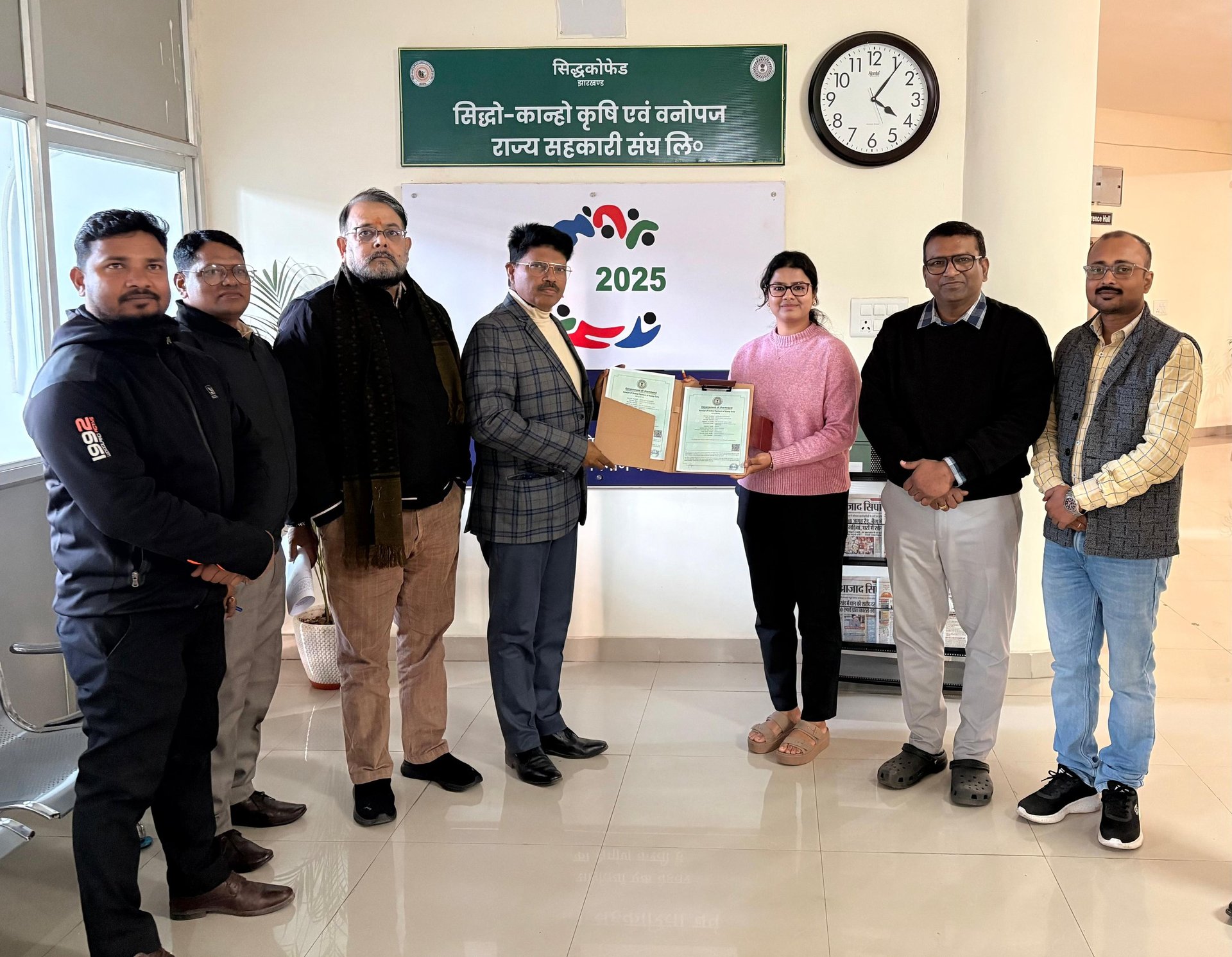
On 5 January 2026, the Bharti Institute of Public Policy (BIPP), ISB, signed a Memorandum of Understanding (MoU) with the Sidho Kanho Agriculture and Forest Produce State Co-operative Federation Limited (SIDHKOFED) in Ranchi, Jharkhand. The partnership aims to increase and stabilise incomes of forest-dependent households by establishing women-owned producer companies (PCs), formalising seasonal forest product (SFP) value chains, and strengthening forest governance across Jharkhand.
Scope of Work
The collaboration will focus on the following areas:
· Design and Operationalisation of Women-Owned PCs
Women-owned PCs will be established as the principal commercial institutions of Jharkhand’s forest economy. These PCs will manage aggregation, processing, marketing, and enterprise governance across forest-based cooperatives. They will operate in coordination with Multi-Purpose Co-Operative societies (MPCSs) and be supported by digital systems for traceability, compliance, and financial management.
· Market Linkages and Value Chain Integration
Market integration will be strengthened through direct linkages between MPCSs, PCs, and institutional and industrial buyers. This structure is intended to ensure transparent price discovery, fair producer returns, and reduced dependence on intermediaries.
· Data-Driven Forest Inventory and Planning
Forest inventory and planning systems will be developed using geospatial and machine-learning technologies. These systems will generate high-resolution data on species composition, forest density, and regeneration patterns. The information will support sustainable harvesting, enterprise planning, and ecological risk management.
· Mechanisation and Local Processing Infrastructure
Community-level processing and mechanisation infrastructure, including drying, grading, and decortication units, will be developed to improve product quality, reduce post-harvest losses, and enhance value realisation at source. These facilities will also contribute to the creation of local green employment.
· Tenure Security and Forest Governance Innovation
Forest governance and tenure security will be strengthened through improved clarity on secure tenure and participatory rights over forest resources. Women’s leadership will be embedded within these governance systems, creating an enabling environment for long-term ecological sustainability and economic empowerment.
Institutional Roles
BIPP–ISB will serve as the strategic and technical partner. It will develop forest-economy frameworks, community-centred enterprise models, digital monitoring and impact-tracking systems for forest inventory mapping, traceability, and enterprise governance. BIPP–ISB will also build the capacity of community institutions and enterprise teams, support branding and market development, and deploy a Forest Economy Fellowship Programme to support field-level implementation and technology adoption.
SIDHKOFED will act as the lead implementing and coordinating agency across Jharkhand. It will mobilise forest-dependent communities, facilitate the formation and governance of MPCSs and PCs, manage aggregation, processing, storage, and logistics, provide land and infrastructure, coordinate with government departments, and oversee financial and regulatory compliance. It will also ensure that harvesting and enterprise operations meet sustainability and traceability standards.
Phased Implementation
The partnership will be implemented in three phases: Phase 1 will initiate work across 10 priority districts: Gumla, Simdega, Lohardaga, Hazaribagh, West Singhbhum, Seraikela-Kharsawan, Latehar, Garhwa, Dumka, and Sahebganj. It will focus on forest inventories, cluster mapping, access infrastructure, and the formation of women-owned PCs along with basic processing and market systems. Phase 2 will move into full commercial operations, including large-scale aggregation and digital tracking of procurement, inventory, sales, and shareholder accounts. This phase will also integrate sustainability safeguards, buyer contracts, quality audits, and participatory governance. Phase 3 will expand the partnership to additional forest-rich districts through a hub-and-spoke model.
By embedding women-owned enterprises, appropriate technology, and community-based ecological stewardship into forest-based commerce, the collaboration creates a institutional pathway for stable livelihoods, stronger forest governance, and long-term ecological conservation in Jharkhand.