
15.01.26
Understanding Bamboo Value Chains in Community Forest Rights Landscapes of Andhra Pradesh
On 6 January 2026, the Initiative on the Forest Economy (IoFE) facilitated a multi-stakeholder field visit across Community Forest Rights (CFR) areas in Rampachodavaram and Chintur divisions, Polavaram district, Andhra Pradesh. The visit aimed to assess bamboo resources, explore industrial linkages, and strengthen partnerships between forest-dependent communities, government institutions, and private sector actors.
Building Partnerships Across Stakeholders
The field visit brought together a diverse group of stakeholders, including community members from CFR villages, officials from the Forest, Horticulture, and Agriculture Departments, and representatives from ITDA, SERP–Velugu, and the District Water Management Agency. Industry partners such as ITC Mangaldeep, UltraTech Cement, JANS Bamboo, and Nandan Enterprises participated in the visit, creating an important interface between producers and potential buyers.
This convergence enabled discussions on aligning ecological sustainability with livelihood generation and industrial demand, laying the foundation for long-term collaboration in developing bamboo-based value chains.
Field Insights and Emerging Opportunities
The visit covered Maddirathigudem, Devarapalle, and Sirasanapalle villages, where participants assessed bamboo availability, species diversity, and harvesting practices, while engaging directly with community members. In Maddirathigudem (Rampachodavaram), discussions focused on the economic viability of harvesting thorny bamboo (Bambusa bambos), with stakeholders exploring its potential across multiple value chains.
Industry interactions highlighted strong demand for bamboo. ITC Mangaldeep identified Bambusa bambos as suitable for agarbatti stick production, a sector that continues to rely heavily on imports. UltraTech Cement explored bamboo as a renewable biofuel, particularly for use as chipped biomass in industrial processes, while JANS Bamboo assessed its suitability for construction and other applications. These engagements point to the potential for developing localised bamboo value chains that directly connect communities to industry.
At the same time, field observations revealed critical challenges. In Sirasanapalle village (Chintur division), bamboo harvesting has not taken place since 2016, resulting in significant loss of stock due to flowering and die-off. This underscores the risks of underutilised forest resources and the urgent need for timely harvesting and market access.
Community interactions indicated a strong willingness to engage in bamboo-based livelihoods. However, this readiness must be supported through clear harvesting protocols, technical training, access to tools and working capital, and reliable aggregation and market systems.
Institutional Alignment and the Way Forward
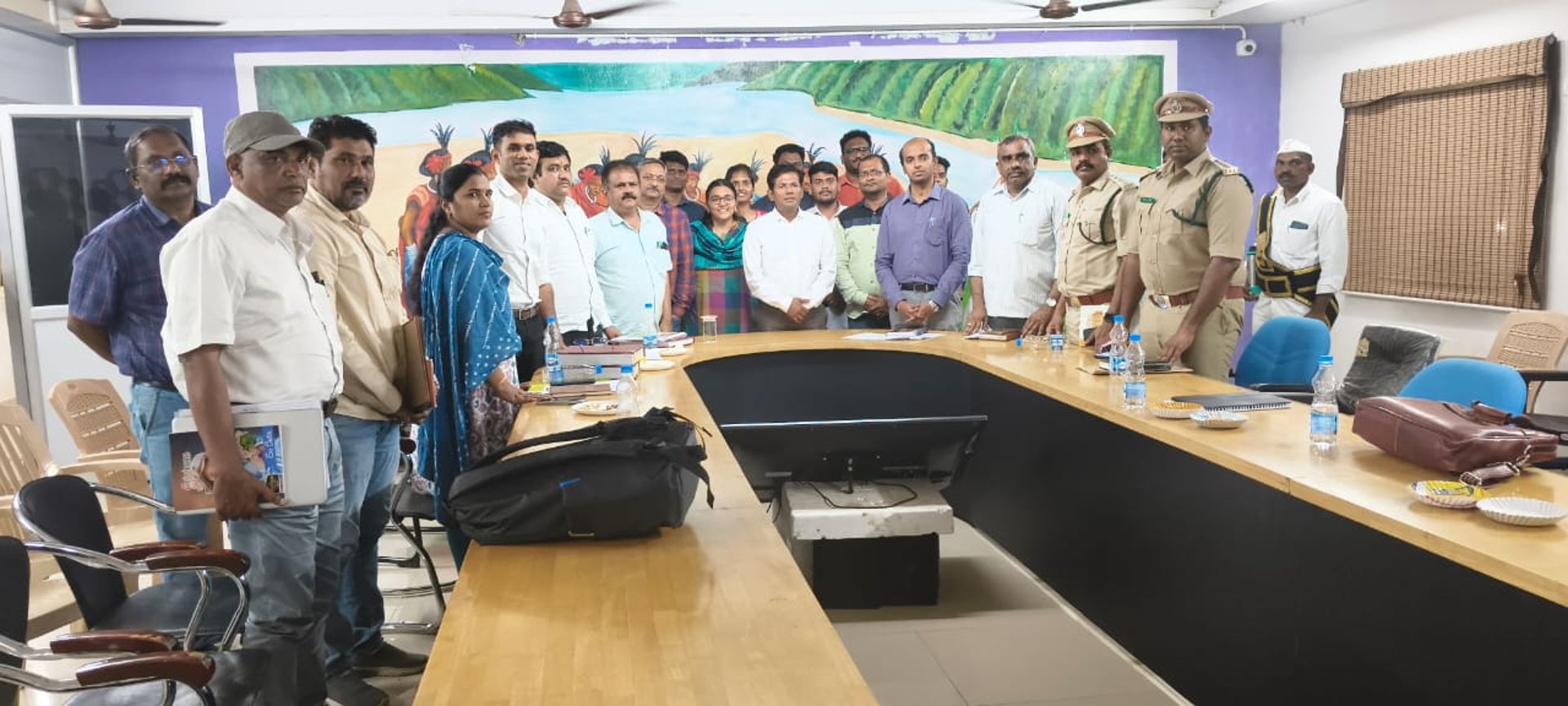
The visit concluded with a district-level review meeting at the ITDA Conference Hall, Rampachodavaram, chaired by the District Collector, Shri A. S. Dinesh Kumar, and the Project Officer, ITDA Rampachodavaram, Shri Bachu Smaran Raj. The meeting brought together all stakeholders to reflect on field observations and chart a way forward.
Key directions included positioning Polavaram and Alluri Sitharama Raju districts as hubs for quality bamboo production and supply, strengthening inter-departmental coordination, and promoting community-owned and women-led enterprise models, including producer companies. There was also a strong emphasis on facilitating technology demonstrations and peer learning exchanges to support scale and sustainability.
This engagement reinforces the idea that forests are not only ecological assets but also economic landscapes. With the right alignment of community rights, institutional support, and market linkages, bamboo can play a central role in building sustainable, climate-resilient, and inclusive rural livelihoods in CFR landscapes.